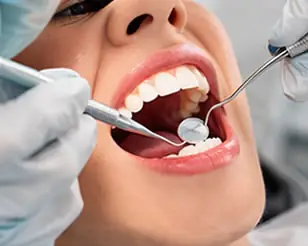
Dental cleaning is the removal of dental plaque(a soft, sticky, bacteria infested film) and tartar(calculus) from the teeth. Dental cleanings are necessary to prevent cavities, gingivitis, and gum disease. If left untreated, severe gum disease can result in tooth loss. Cleaning and polishing of the teeth leaves the surfaces of the teeth clean and smooth so that bacteria are unable to stick to them.
The dental hygienist or dentist will use specialized instruments to gently remove these deposits without harming the teeth. First, the dental hygienist will use an ultrasonic device that emits vibrations to knock larger pieces of tartar loose. The ultrasonic device sprays a cooling mist of water while it works to wash away debris and keep the area at a comfortable temperature. Next, hand tools called scalers and curettes are used to manually remove smaller deposits and smooth the tooth surfaces. These tools are curved and shaped to match the curves of the teeth. Once all the tooth surfaces have been cleaned of tartar and plaque, the teeth are polished using a slow speed hand piece with a soft rubber cup that spins on the end. Prophylaxis paste which is a special gritty toothpaste like material is applied to the teeth to make them shiny and smooth. Your dental hygienist or dentist may also apply fluoride to the teeth to help strengthen the tooth enamel.
Transcript
registered dental hygienists are highly trained and licensed oral health professionals they specialize in providing you with clinical therapeutic and educational services to enhance your oral and overall health hygienists receive intensive specialized education which includes courses in chemistry physiology nutrition microbiology head and neck Anatomy oral pathology pharmacology and Radiology as well as courses in Advanced Dental science and dental hygiene prior to graduation hygienists must pass rigorous tests and complete hundreds of clock hours of supervised instruction in clinical practice hygienists serve many functions in the dental office they carefully examine your teeth mouth and gums and look for any signs of Decay periodontal disease oral cancer or other problems they also take dental X-rays so the dentist can view them and quickly diagnose any problems that may exist as part of the preventive function of the job your hygienist uses specialized instruments and techniques to thoroughly clean all surfaces of your teeth comfortably removing plaque Tartar and stains from above and below your gum line they are often involved with the specialized treatment of gum disease such as scaling and root planing hygenist may also apply fluoride gels or other treatments your hygienist will teach you how to effectively care for your teeth at home to help you prevent Decay and periodontal disease show you how to select the proper toothbrush and dental floss and demonstrate the most effective techniques for brushing and flossing hygienist can also explain the relationship between a healthy diet and dental health offering suggestions about which foods to select and which to avoid your hygienist is an excellent educational resource who can help you and your family keep your healthy Smiles for a lifetime
Deep Dental Cleaning Transcript
The goal of scaling and root planing is to eliminate the source of periodontal infection. When you have active periodontal disease, routine cleanings are not enough because they generally focus on the areas of the tooth that are above the gum line. A scaling and root planing procedure removes plaque, tartar, and bacterial toxins from the surfaces below the gum line. To keep you comfortable, we usually numb the area before the procedure begins. Then, using instruments like these, we carefully and meticulously remove the plaque and tartar and then smooth the root surfaces. Depending on your situation, we may also apply fluoride or medication to the area. If you have just a few pockets of infection, we may treat just those teeth. But, if the infection is more widespread, we may treat one or two quadrants of your mouth at a time, spacing the treatment over several appointments. Scaling and root planing removes the source of infection, helps your gums heal and tighten around the teeth, and gives you back your healthy smile.